Open Standards in EV Charging: OCPP, OCPI, and the Software Platforms Powering Interoperable Networks
Open Standards Power the EV Charging Ecosystem
EV charging infrastructure depends heavily on open communication standards that allow chargers, vehicles, and software platforms to interact reliably. Unlike closed ecosystems where hardware and software are controlled by a single vendor, the EV charging industry is inherently multi-vendor. Charging stations, vehicles, backend platforms, payment providers, and roaming networks must all communicate seamlessly.
Without standardized protocols, each charger manufacturer would require proprietary software integrations with every charging network operator. This would dramatically slow infrastructure deployment and make network interoperability nearly impossible.
Open standards solve this challenge by defining how devices and systems communicate across the charging ecosystem. Several key standards now enable interoperability between chargers, backend platforms, and electric vehicles.
Learn more about how S44 Energy builds open EV charging infrastructure here.
Open Charge Point Protocol (OCPP)
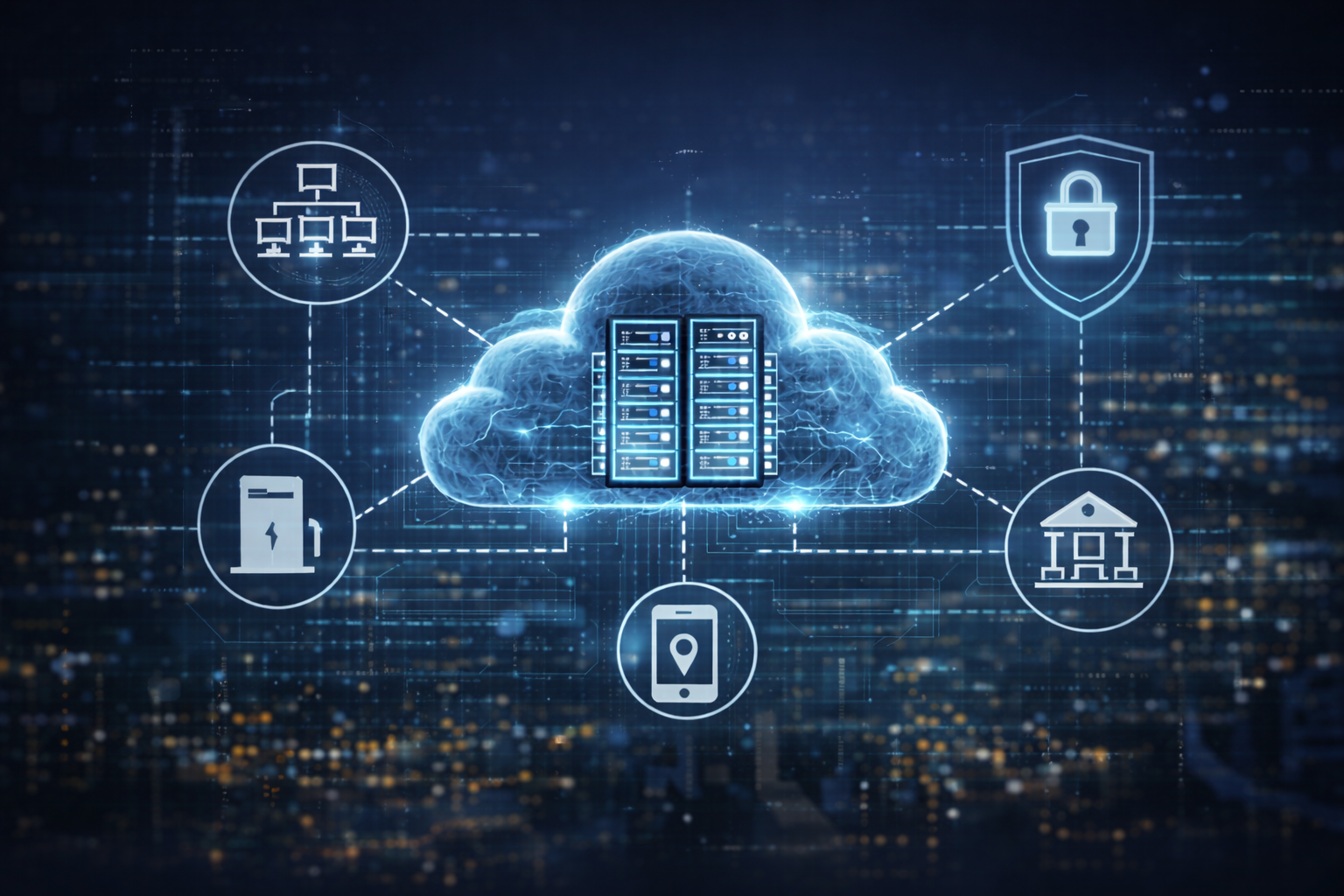
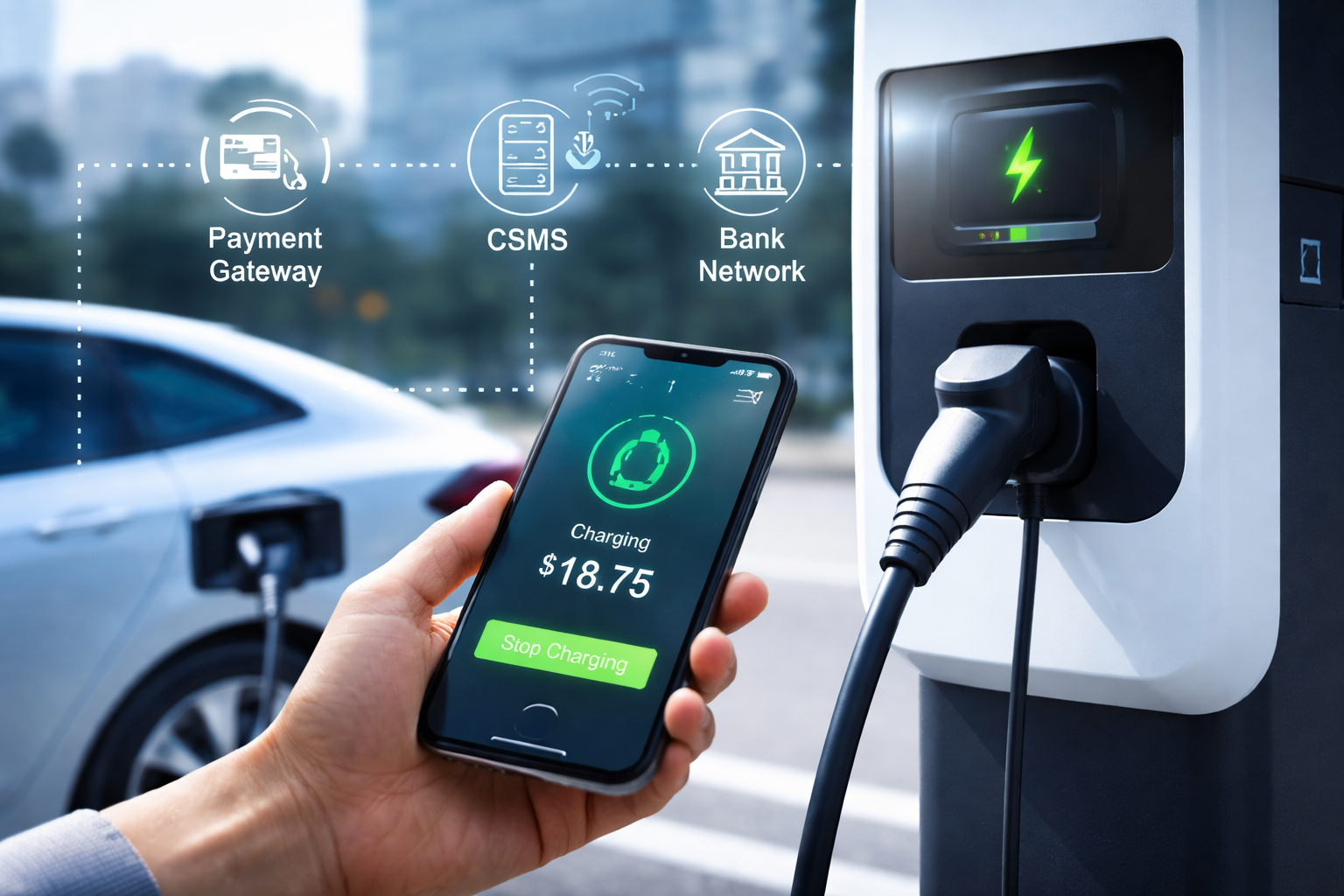
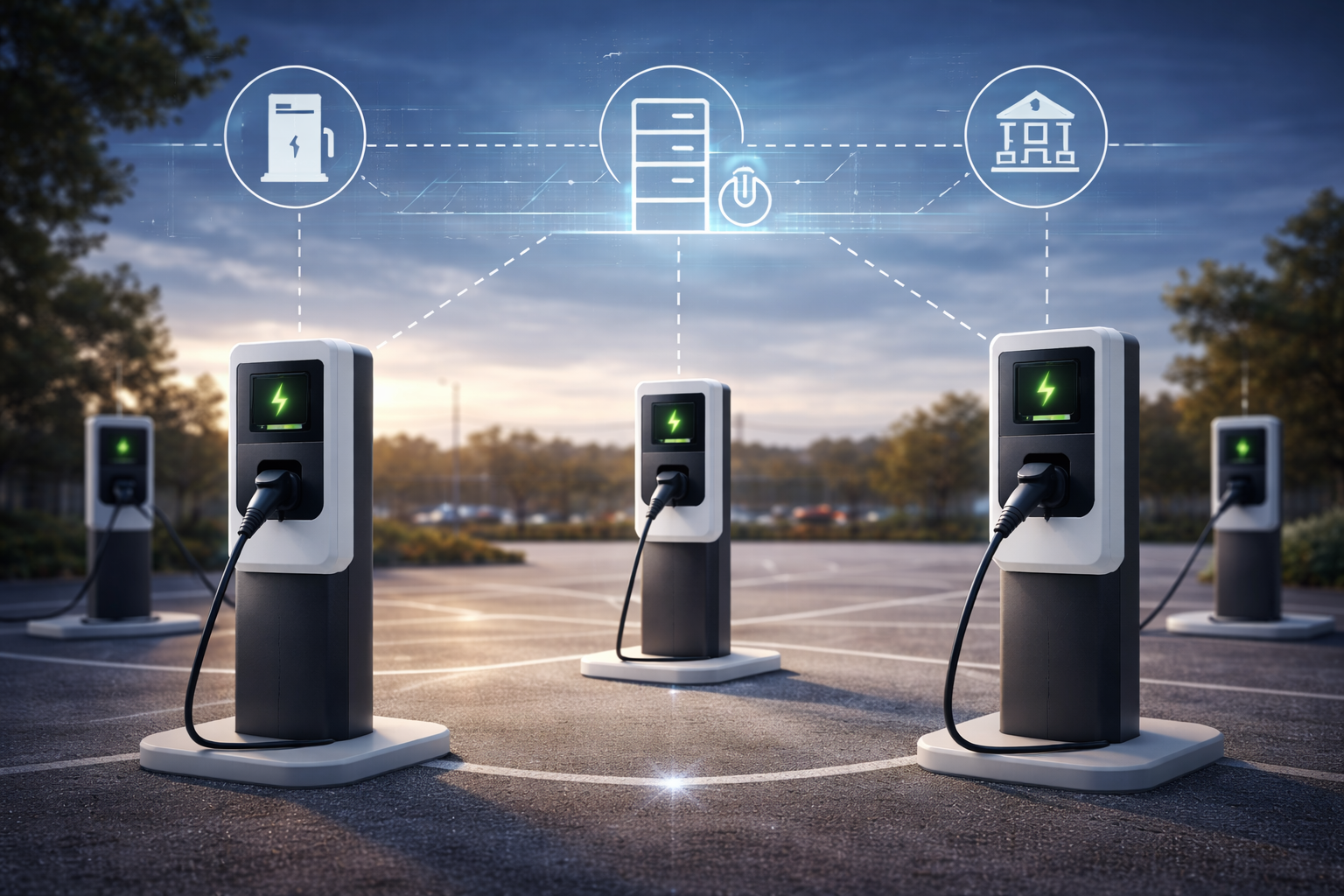
The Open Charge Point Protocol (OCPP) is the most widely adopted communication standard between EV chargers and backend charging management systems. Developed and maintained by the Open Charge Alliance, OCPP enables chargers from different manufacturers to communicate with a centralized platform known as a Charging Station Management System (CSMS).
Through OCPP, charging operators can remotely manage and monitor their infrastructure.
Key capabilities include:
• Monitoring charger health and operational status
• Starting and stopping charging sessions remotely
• Managing authentication and user access
• Performing remote firmware updates
• Collecting telemetry and transaction data
• Implementing smart charging and load management
Because OCPP is vendor-neutral, operators can deploy chargers from multiple manufacturers while maintaining a single backend platform.
OCPP 2.0.1 and the Evolution Toward OCPP 2.X
Earlier versions such as OCPP 1.6 remain widely deployed across global charging infrastructure. However, the newer OCPP 2.0.1 specification introduces significant improvements designed to support next-generation charging networks.
Enhancements include:
• Certificate-based cybersecurity architecture
• Advanced device management and diagnostics
• Native support for **Plug & Charge** authentication
• Expanded smart charging capabilities
• Improved telemetry and reporting frameworks
S44 Energy’s open-source CSMS platform CitrineOS, a Linux Foundation Energy project supports both modern OCPP 2.0.1 chargers and legacy OCPP 1.6 hardware through reverse compatibility. This allows operators to integrate existing infrastructure while preparing for newer standards.
Learn more about CitrineOS here.
With a CitrineOS OCPP 2.1 slated for Q1 2026, evolving hardware and charging networks stand to gain an open-source solution to manage their assets reflecting the latest benefits of the protocol.
By supporting both legacy and next-generation chargers, platforms like CitrineOS allow operators to modernize their infrastructure without replacing existing hardware investments.
Open Charge Point Interface (OCPI)
While OCPP governs communication between chargers and backend platforms, the Open Charge Point Interface (OCPI) enables interoperability between charging networks themselves.
OCPI allows EV drivers to charge across multiple networks using a single account or mobility service provider. Through roaming agreements, charging networks exchange authentication credentials, session data, and billing information.
Official OCPI documentation:
[https://evroaming.org](https://evroaming.org)
OCPI enables:
• Cross-network driver authentication
• Charging session data exchange
• Billing and settlement between operators
• Integration with mobility service providers
S44 Energy’s commercial charging platform TopazEV built on the CitrineOS foundation, integrates these roaming capabilities to support interoperable charging ecosystems.
Learn more about TopazEV here
This architecture allows operators to maintain control over their infrastructure and pricing models while participating in global roaming networks.
ISO 15118 and Plug & Charge
Another important standard shaping the future of EV charging is ISO 15118, which governs communication between electric vehicles and charging stations.
One of the most important capabilities enabled by this protocol is Plug & Charge, which allows vehicles to authenticate automatically when connected to compatible chargers.
Instead of requiring drivers to swipe a card or open a mobile app, Plug & Charge relies on secure digital certificates stored within the vehicle. When the vehicle connects to a compatible charger, authentication and billing can occur automatically.
This technology significantly simplifies the charging experience while improving security and reducing transaction friction.
Why Open Standards Matter
As EV adoption accelerates worldwide, charging infrastructure must scale rapidly while maintaining interoperability across hardware vendors, software platforms, and mobility providers.
Open standards such as OCPP, OCPI, and ISO 15118 allow charging networks to grow without requiring proprietary integrations between every device and system.
Platforms built on open standards also provide operators with greater flexibility. Rather than being locked into a single vendor ecosystem, operators can adopt new hardware, integrate new technologies, and evolve network capabilities over time.
S44 Energy’s work with CitrineOS and TopazEV reflects this philosophy. By building charging infrastructure software on open standards and open-source foundations, these platforms help operators and manufacturers deploy interoperable networks today while preparing for the evolving standards of tomorrow.