Planning EV Charging Infrastructure: Selecting the Right CSMS, Managing Costs, and Preparing for Compliance

Why EV Charging Infrastructure Planning Starts with Software
When organizations begin planning EV charging deployments, the focus often starts with hardware such as charger models, installation costs, and electrical capacity. However, the long-term success of a charging network depends just as much on the software platform that manages the infrastructure.
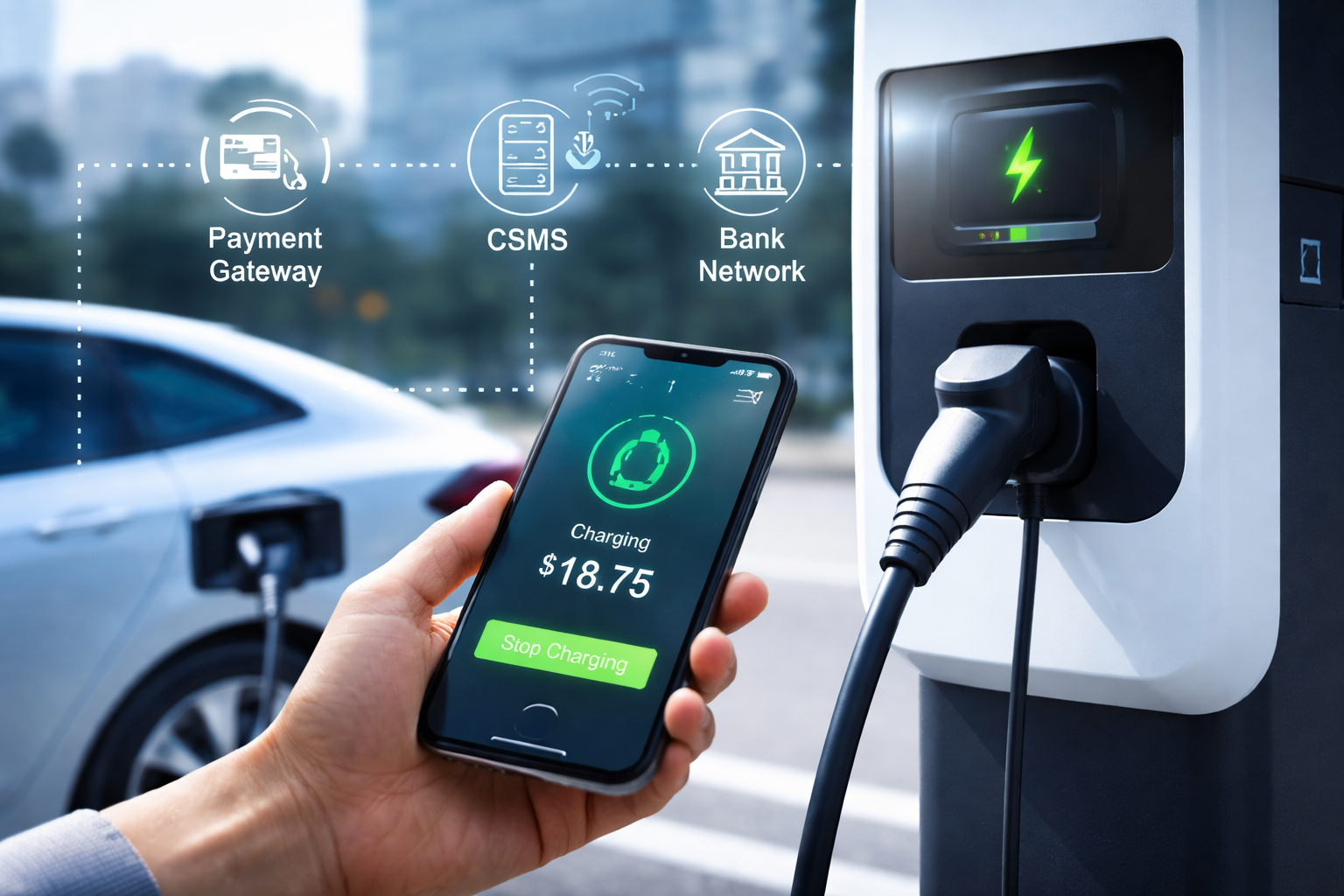
EV charging networks rely on backend software platforms to coordinate charger communication, authenticate drivers, process payments, monitor device health, and integrate with roaming networks. As deployments scale, these platforms must manage thousands of charging stations and large volumes of operational data.
The scale of EV charging infrastructure continues to grow rapidly. According to the International Energy Agency’s Global EV Outlook, the number of publicly accessible EV charging points worldwide exceeded 5 million in 2024, with more than one million chargers added in a single year.
As infrastructure expands, selecting a scalable and interoperable software platform becomes one of the most important planning decisions for charging network operators.
Selecting a Charging Station Management System (CSMS)
At the center of every EV charging network is a Charging Station Management System (CSMS). This backend platform acts as the operational control layer for the entire charging infrastructure.
A CSMS enables operators to:
• monitor charger availability and uptime
• start and stop charging sessions remotely
• authenticate drivers
• manage firmware updates
• collect telemetry and diagnostics data
• manage pricing and billing
• integrate with roaming networks
Most modern charging platforms rely on the Open Charge Point Protocol (OCPP) to communicate with chargers. OCPP is maintained by the Open Charge Alliance and enables interoperability between charging hardware and backend software.
S44 Energy’s open-source CSMS platform CitrineOS supports both modern OCPP 2.0.1 chargers and legacy OCPP 1.6 chargers through reverse compatibility.
Build vs Buy: Evaluating Charging Platform Strategy
Organizations deploying EV charging infrastructure must decide whether to build a charging platform internally or purchase an existing solution.
Building a platform internally can provide full control over network architecture and data ownership, but it requires expertise in several specialized areas including device communication protocols, payment systems, cybersecurity, cloud infrastructure, and firmware lifecycle management.
For most operators, building a complete charging management platform from scratch can require significant time and engineering resources.
Open-source CSMS platforms such as CitrineOS allow operators to maintain architectural control while accelerating development timelines.
Commercial platforms such as TopazEV build on this foundation to provide enterprise-grade features such as analytics, payment integrations, and roaming support while maintaining compatibility with open standards.
RFP Requirements for Charging Infrastructure
Organizations procuring charging infrastructure frequently use Requests for Proposals (RFPs) to evaluate hardware and software vendors. A well-designed RFP should evaluate both technical capabilities and long-term interoperability.
Typical software requirements include:
• support for OCPP 1.6 and OCPP 2.0.1
• multi-vendor charger compatibility
• remote diagnostics and firmware updates
• payment and billing integrations
• roaming support using OCPI
• data reporting and analytics
• cybersecurity and authentication controls
• scalability across large charger fleets
NEVI Compliance Considerations
In the United States, the National Electric Vehicle Infrastructure (NEVI) program introduced a set of technical and operational standards designed to improve reliability and interoperability across public charging networks. These guidelines include requirements for charger uptime, open communication protocols, accessible payment options, and standardized data reporting. Even as policy priorities evolve, many charging network operators use these standards as a reference point when designing new infrastructure deployments.
These requirements include:
• minimum 97 percent uptime
• open communication standards such as OCPP
• credit card payment capability
• standardized data reporting
• interoperability across charging networks
More information on NEVI guidance can be found here.
Cost and Scalability Planning
Beyond hardware installation costs, operators must also evaluate the long-term operational cost of running a charging network. Software architecture plays a significant role in determining these costs.
Key cost considerations include:
• platform licensing or SaaS fees
• cloud infrastructure hosting
• maintenance and support requirements
• payment processing costs
• data storage and analytics infrastructure
Research from McKinsey highlights that large charging networks may eventually manage tens of thousands of charging stations.
Planning Charging Networks for Long-Term Success
EV charging infrastructure is transitioning from pilot deployments into critical transportation infrastructure. As networks expand, charging operators must plan for scalability, interoperability, and regulatory compliance.
Successful charging networks require:
• interoperable communication protocols
• scalable backend software platforms
• reliable payment infrastructure
• roaming network integration
• long-term control over operational data
Platforms such as CitrineOS and TopazEV, developed by S44 Energy, enable operators to deploy interoperable charging infrastructure while maintaining flexibility as the ecosystem evolves.